




Consult Dr Seng if conservative treatment no longer provides sufficient relief.
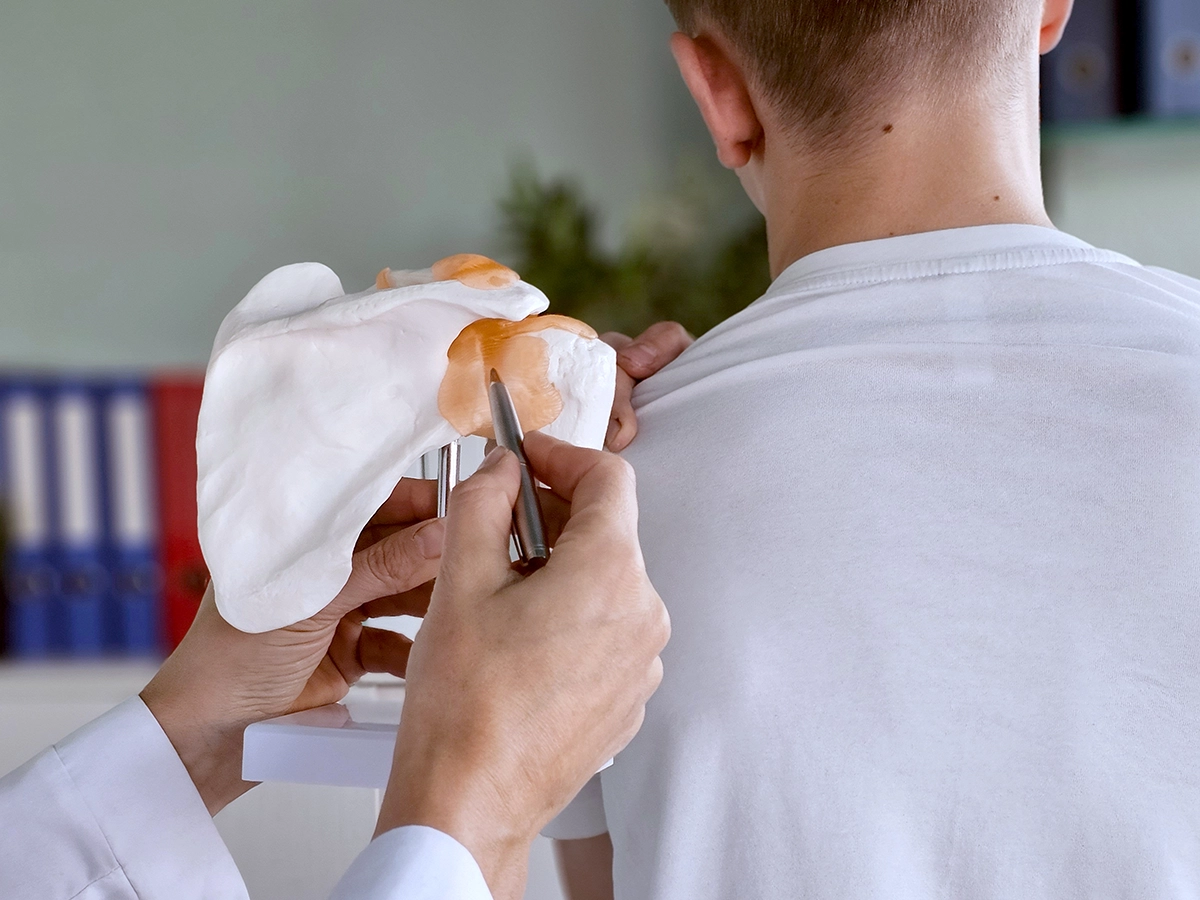
Consult Dr Seng if conservative treatment no longer provides sufficient relief.

Frozen Shoulder: Causes, Symptoms and Treatments
Frozen shoulder can begin as a mild, nagging ache in the shoulder, but over time it may progress into significant stiffness and restricted movement. What starts as occasional discomfort can gradually interfere with simple, everyday activities such as reaching overhead, getting dressed or even sleeping comfortably.
Many people delay seeking treatment in the early stages, assuming the pain will resolve on its own. However, without proper care, frozen shoulder can worsen and lead to prolonged limitations that affect both daily function and quality of life. With early recognition and appropriate treatment, it is possible to relieve pain, restore mobility and prevent long-term stiffness.

What Is Frozen Shoulder?
Frozen shoulder, also known as adhesive capsulitis, is a condition that causes pain, stiffness and reduced movement in the shoulder joint. It occurs when inflammation leads to thickening and tightening of the shoulder capsule, the connective tissue that surrounds the joint.
As the capsule becomes stiff and less flexible, shoulder movement becomes increasingly restricted and painful. This can make everyday activities such as reaching, lifting or rotating the arm more difficult over time.
Causes and Risk Factors of Frozen Shoulder
Frozen shoulder can develop when the shoulder joint is not used for a period of time, such as after an injury, surgery or prolonged immobilisation. Reduced movement may lead to stiffness and inflammation within the joint.
Certain individuals are also at a higher risk of developing frozen shoulder, particularly those with underlying medical conditions or specific lifestyle factors.
Common causes and risk factors include:
 Prolonged shoulder immobility, such as after injury or surgery
- Diabetes
- Thyroid disorders
- Cardiovascular disease
- Age between 40 and 60 years

In some cases, frozen shoulder may develop without an obvious cause. This is known as idiopathic frozen shoulder.

What Are the Common Symptoms of Frozen Shoulder?
Frozen shoulder typically develops gradually, with symptoms that worsen over time. The condition often progresses through stages, starting with pain and followed by increasing stiffness and reduced movement.
Common symptoms include:
- Dull or aching pain in the shoulder, which may worsen at night
- Stiffness that limits the range of motion
- Difficulty lifting the arm or reaching overhead
- Pain when performing everyday activities, such as dressing or grooming
- Progressive loss of shoulder movement over time
In more advanced stages, the shoulder may become significantly restricted, making even simple movements difficult.
Seek a medical assessment for early management and care.
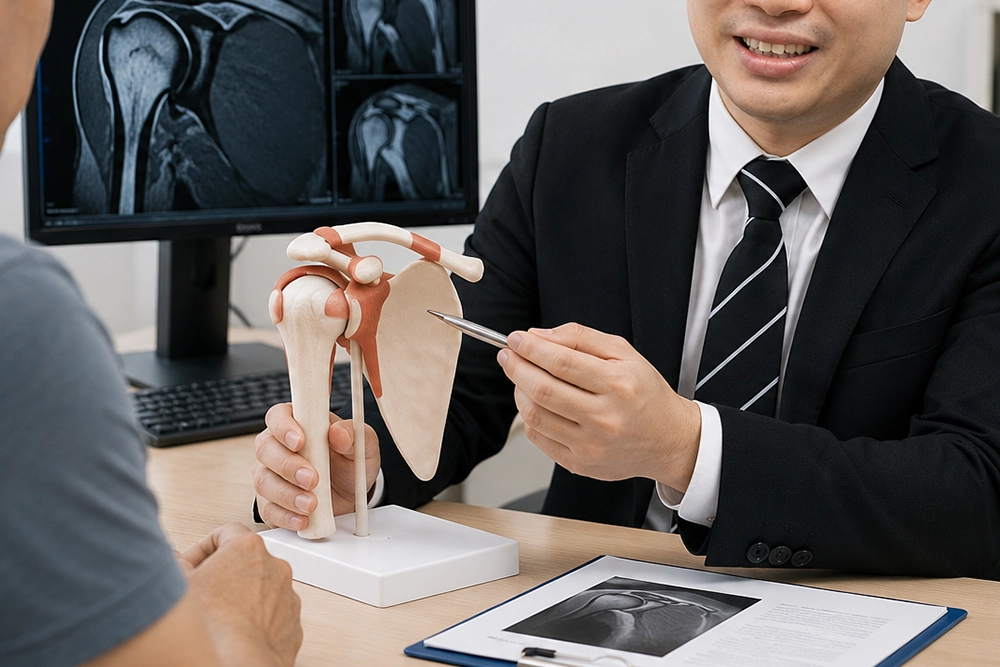
How Is Frozen Shoulder Diagnosed?
Frozen shoulder is typically diagnosed through a clinical evaluation by an orthopaedic specialist. The doctor will assess your symptoms, medical history and shoulder function to determine the extent of stiffness and pain.
During the examination, you may be asked to perform specific movements to evaluate your range of motion. Both active movement (performed by you) and passive movement (assisted by the doctor) are usually assessed.
In some cases, imaging tests may be recommended to rule out other conditions that can cause similar symptoms.
These may include:
- X-rays to assess the bones and joint structure
- MRI or ultrasound scans to evaluate soft tissues such as tendons and ligaments
A thorough assessment helps confirm the diagnosis and ensures that the most appropriate treatment plan is recommended.
What Are the Treatment Options for Frozen Shoulder?
Treatment for frozen shoulder focuses on relieving pain, restoring movement and improving shoulder function. The approach depends on the stage and severity of the condition, with most cases managed successfully using non-surgical methods.
Non-surgical Treatments
In many cases, frozen shoulder can be treated without surgery. These treatments aim to reduce pain and gradually improve mobility.
Common non-surgical treatments include:
Pain Relief Medications
Medications may be prescribed to help manage pain and reduce discomfort, allowing you to stay active and participate more effectively in rehabilitation.
Physiotherapy
A structured physiotherapy programme focuses on improving range of motion, flexibility and overall shoulder function through guided techniques.
Guided Stretching and Strengthening Exercises
Targeted exercises help to gradually restore mobility and strengthen the surrounding muscles, supporting long-term shoulder stability.
Corticosteroid Injections
These injections help to reduce inflammation within the shoulder joint, providing pain relief and improving movement, particularly in the early stages of the condition.
Hydrodilatation (Joint Distension)
This procedure involves injecting fluid into the shoulder joint to stretch the tightened capsule, helping to improve mobility and reduce stiffness.
These treatments are often used in combination and tailored to the individual’s condition and stage of recovery.
Frozen Shoulder Surgery
Surgery may be considered if symptoms persist despite non-surgical treatment or if shoulder stiffness is severe and significantly affects daily function. Frozen shoulder surgery, also known as capsulitis shoulder surgery, is typically performed using minimally-invasive techniques to improve movement and reduce stiffness.
Surgical options may include:
Arthroscopic Capsular Release
This minimally-invasive procedure, also referred to as keyhole surgery for frozen shoulder, is performed using small instruments inserted through tiny incisions. The tightened shoulder capsule is carefully released to reduce stiffness and improve range of motion. It is typically recommended when symptoms do not improve with non-surgical treatment.
Manipulation Under Anaesthesia (MUA)
During this procedure, the shoulder is gently moved through a controlled range of motion while you are under anaesthesia. This helps to break up stiffness and improve mobility without making any surgical incisions. It may be performed alone or in combination with other treatments.
Surgical treatment is typically followed by physiotherapy to restore movement and optimise recovery.
How Can Frozen Shoulder Be Prevented?
While frozen shoulder cannot always be prevented, especially when it develops without a clear cause, certain measures can help reduce the risk or minimise its severity.
Preventive measures include:
- Keeping the shoulder active with regular, gentle range-of-motion exercises
- Following a structured rehabilitation programme after injury or surgery
- Avoiding prolonged shoulder immobility where possible
- Managing underlying medical conditions such as diabetes
- Seeking early medical advice if shoulder pain or stiffness develops
Regain Shoulder Movement with Dr Seng Chusheng
Frozen shoulder is a progressive condition that can lead to prolonged pain and significant restriction in movement if left untreated. As stiffness worsens, even simple daily activities can become increasingly difficult. Early diagnosis and timely intervention are key to relieving symptoms, restoring mobility and preventing long-term limitation of shoulder function.
At Axis Shoulder Injury Clinic, we provide specialist-led care tailored to each stage of frozen shoulder. With a strong focus on shoulder conditions, including overuse and sports-related injuries, Dr Seng Chusheng offers comprehensive, evidence-based treatment to relieve pain, restore movement and support long-term shoulder function. Schedule a consultation for a personalised assessment and treatment plan.

FAQs About Frozen Shoulder
When should I see a frozen shoulder specialist?
Can frozen shoulder go away on its own without treatment?
How long does it take to recover from a frozen shoulder?
Can frozen shoulder come back after recovery?

Dr Seng Chusheng
Senior Consultant Orthopaedic Surgeon (Sports & Exercise Medicine)
MBBS (Singapore), MRCS (Edinburgh), MMed (Orth), FRCS (Edinburgh)
Dr Seng Chusheng is a senior consultant orthopaedic surgeon with over 20 years of clinical experience and a focus on shoulder conditions. He manages a broad range of shoulder problems, including rotator cuff tears, shoulder dislocations, frozen shoulder and arthritis. Dedicated to supporting shoulder recovery, he provides personalised treatment plans aimed at restoring movement, reducing pain and improving daily function.
Dr Seng completed his MBBS and Master of Medicine in Orthopaedic Surgery at the National University of Singapore and is a Fellow of the Royal College of Surgeons of Edinburgh, UK. His approach emphasises careful diagnosis and evidence-based treatment, with close collaboration with physiotherapists to support recovery.
At Axis Shoulder Injury Clinic, supporting our patients in their recovery and regaining of mobility is our top priority.
We warmly welcome patients with shoulder injuries to experience our customised treatment. Call us at 9711 8888 for same-day or next day consultation!
Contact Info

Mount Elizabeth Novena Medical Centre
38 Irrawaddy Road, #06-33Singapore 329563
Parkway East Medical Centre
319 Joo Chiat Place, #04-08,Singapore 427989
Mount Alvernia Medical Centre A
820 Thomson Road, #03-08,Singapore 574623

Telephone


Operating Hours
| Mon - Fri | : | 8:30am - 5:30pm |
| Sat | : | 8:30am - 12:30pm |
| Sunday & PH : Closed | ||